
Police Powers
|
The CCLA seeks to ensure that police powers are used in a manner that is necessary, proportionate and consistent with constitutional standards. Specific police powers that the CCLA has focussed on include detention and arrest, the use of force, and search and seizure.
Police Powers is part of the Public Safety program. You can find more information about it on its main program page.
|
By Cara Zwibel on April 22, 2013
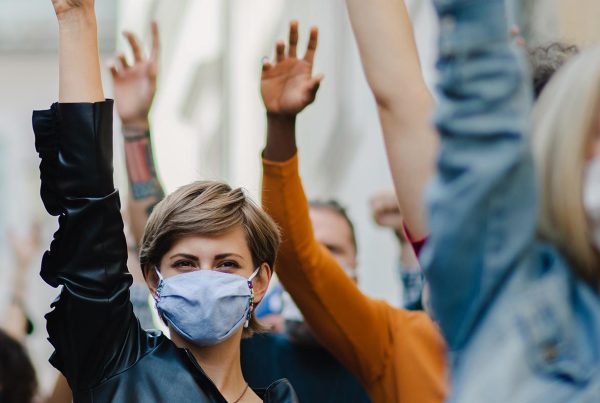
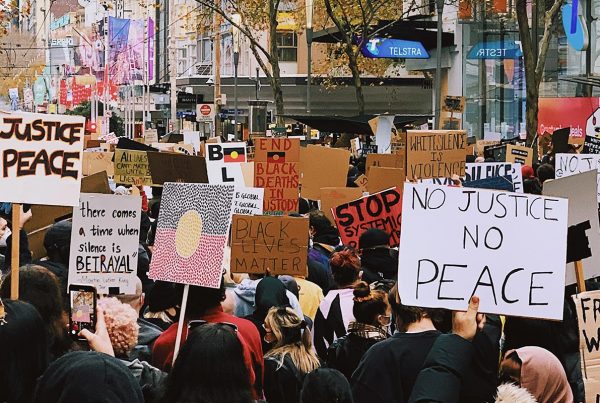
CCLA has written to Montreal Councillor Alex Norris who planned to introduce a motion to repeal Montreal’s controversial bylaw: P-6. The bylaw requires individuals to provide prior notice to police of their meeting places and demonstration itineraries regardless of the size of the planned protest and without making any exceptions for spontaneous assemblies. The bylaw also prohibits individuals from wearing facial coverings at a public demonstration without reasonable cause. The bylaw has been used to clamp down on peaceful protests before they have even gotten underway and individuals have received tickets of over $600 each. CCLA wrote to Montreal’s City Council in May of 2012 when the amendments to the bylaw were first considered and passed. With recent mass arrests taking place under the bylaw, CCLA has again written to the City expressing its concerns and arguing for the need to protect fundamental freedoms, including the freedom to peacefully assemble and freedom of expression.
See CCLA’s letter regarding the motion to repeal P-6 in English here and in French here.
By Cara Zwibel on April 4, 2013
The CCLA is deeply concerned about the Montreal police force’s use of a controversial municipal bylaw to cut off social protests before they begin, detain individuals en masse, and issue costly tickets to individuals seeking to exercise their constitutionally protected rights.
In May of 2012 Montreal’s City Council adopted amendments to a bylaw that made it illegal to wear a mask during a public demonstration and required demonstrators to provide prior notification to police of their meeting place and route. At that time, CCLA wrote to the Mayor and city councillors expressing our concerns about the bylaw – in particular that these provisions placed unnecessary and unconstitutional restrictions on freedom of expression and peaceful assembly, both of which are protected under the Canadian and Quebec Charters. While these freedoms may be subject to limits or restrictions, such restrictions can only be put in place where there is a demonstrated compelling and pressing objective and where the measures taken to achieve the objective do not infringe on rights more than necessary. Restrictions similar to those included in the Montreal bylaw were also in a controversial piece of provincial legislation in Quebec, Bill 78 (which subsequently became Law 12). Quebec’s new PQ government repealed Law 12 shortly after coming into power in September, but Montreal’s similar municipal bylaw remains in place.

In a series of recent demonstrations in Montreal, the Service de police de la Ville de Montreal (SPVM) has used the bylaw to “kettle” demonstrators when they fail to provide the police with a route for their demonstration. In three instance in March of 2013, police put an end to demonstrations before they even began and issued hundreds of tickets under the bylaw for over $600 each. In CCLA’s view, individuals should not have to pay to exercise their fundamental freedoms, nor should police engage in mass arrests and detentions of peaceful social protesters. CCLA has written to the Mayor of Montreal urging repeal of the bylaw and to the Chief of the SPVM urging the police to cease engaging in these troubling practices.
Read the CCLA’s letter to the Mayor of Montreal.
Read the CCLA’s letter to the Chief of the SPVM.
By Abby Deshman on March 20, 2013
From the Toronto G20 to the Occupy movement, the widespread (and continuing) protests in Quebec and the nation-wide Idle No More actions, individuals in Canada have been participating in their democracy through diverse and creative expressive acts. As a society we have also witnessed a range of government and police responses to these grassroots movements. And on numerous occasions in recent years CCLA has called out to municipal, provincial and federal government actors to respect and facilitate freedom of peaceful assembly. Although there have certainly been some examples of government effectively facilitating peaceful protest, there have been numerous instances over the past three years where CCLA believes that this freedom has been threatened or where constitutional rights were violated.
CCLA is now joining voices with civil society NGOs from across the globe to voice shared concerns and call on the United Nations to provide meaningful protection for freedom of peaceful assembly and human rights in the context of social protest.
On March 7, a letter signed by nine national organizations spanning five continents was sent to the Member States of the United Nations Human Rights Council. Democracies must welcome diverse forms of public participation. Such activities must be actively facilitated by states if they are to comply with their obligations to protect, respect and fulfill international human rights.
CCLA and our international counterparts welcome the renewed and increased attention to freedom of peaceful assembly and the protection of human rights, including freedom of association, expression and opinion, in the broader context of social protest. As domestically-focused actors with decades of experience monitoring policing and protest, the signatory organizations have seen first hand the diverse and multiple facets of the right to peaceful assembly and rights within the context of social protest more broadly. Although our individual domestic experiences stem from diverse political contexts and legal systems, we are united by our conviction that public protest is an essential component of any vibrant democracy. We are also united by our concern for the protection of this fundamental right.
A draft resolution, “The promotion and protection of human rights in the context of peaceful protests”, is being debated in Geneva and is scheduled for adoption at the 22nd Session of the Human Rights Council. The civil society organizations that have signed the letter are:
American Civil Liberties Union – ACLU (USA)
Association for Civil Rights in Israel – ACRI (Israel)
Canadian Civil Liberties Association – CCLA (Canada)
Centro de Estudios Legales y Sociales – CELS (Argentina)
Egyptian Initiative for Personal Rights – EIPR (Egypt)
Hungarian Civil Liberties Union – HCLU (Hungary)
Irish Council for Civil Liberties – ICCL (Ireland)
Legal Resource Centre – LRC (South Africa)
Liberty (UK)
To read the letter to the UN Human Rights Council click here.
To read the joint press release from all nine organizations click here.
By Abby Deshman on February 20, 2013
Generally, the police do not need a warrant to search a person who is under arrest, and regularly do look through arrestees’ bags and pockets to ensure officer safety and secure potential evidence. Fifteen years ago this kind of search might turn up a wallet, some papers, maybe an address book. Today, however, through the modern magic of cell phones, we can carry our entire digital existence – phone records, contact lists, emails, social media profiles, location records, photos and much more – in our pockets. The privacy implications of giving police warrantless access to this information upon arrest are enormous. Should cell phones really be treated like the scraps of paper, notes or printed photos we carry in our pockets or knapsacks? Or should they be seen more like entirely distinct places – with vast amounts of personal information and correspondence and an unknown number of automatically-entered passwords that open doors to any number of linked accounts.

In September 2012 CCLA appeared before the Ontario Court of Appeal in R. v. Fearon to argue that a cell phone is not like a wallet or papers you may carry in your purse – and the law should not treat it in the same way. We urged that, absent exigent circumstances such as danger to life or imminent loss of evidence, the police should be required to get a warrant before searching a person’s hand-held electronic device.

On Wednesday the Court released their decision, and unfortunately did not agree with CCLA’s argument. They found that, so long as the police reasonably believe there may be evidence on the phone, they can conduct a warrantless “cursory” search of an arrestee’s cell phone if unlocked.
While the judgment makes it clear that there are limits to police search powers incident to arrest, the ruling gives a significant amount of discretion to individual police officers. Arresting someone is not the same as charging them with a crime. Many people who are arrested never even proceed to charges, let alone end up in trial in front of a judge! The privacy implications of new technologies are often misunderstood by the courts: a cell phone is not a wallet. We will continue to advocate a better understanding of the privacy implications of new technology in the context of policing. This is not the end of this story, in the meantime, lock your phone.
To read CCLA’s factum at the Court of Appeal click here.
To read the Court of Appeal’s decision click here.
By Noa Mendelsohn Aviv on January 23, 2013
As part of an ongoing public discussion with the Toronto Police Services Board about race-based harassment (racial profiling), CCLA’s Equality Program Director Noa Mendelsohn Aviv will address the Board. The current issue is the “receipt” the police will provide to individuals who are detained by police, questioned, and “carded” (the practice by which police record the identity and personal information about a person in the police database). CCLA is urging the Board to make sure individuals receive a mirror copy of certain basic information recorded by police about them, and the specific reason for the stop.
For CCLA’s submissions to the TPSB on this matter, click here.
By Abby Deshman on January 18, 2013
When is a police officer’s suspicion ‘reasonable’, and when it is a subjective hunch that could easily target innocent individuals – perhaps based on improper or stereotypical assumptions about ‘suspicious’ people or behaviour? Four years ago, in a 5-4 split, a majority of the Supreme Court found that the police could conduct warrantless searches using sniffer dogs so long as they had a “reasonable suspicion” that a person was engaged in a drug crime. Although the Court provided some guidance, the precise contours of what constituted a reasonable suspicion, was left to lower courts to decide on a case-by-case basis. On Tuesday, January 22, the Supreme Court of Canada will again examine sniffer dogs and the ‘reasonable suspicion’ standard as they consider a pair of cases, R. v. MacKenzie and R. v. Chehil. In each case the trial court found that the police did not have enough evidence to form a reasonable suspicion – assessments that were overturned by the respective courts of appeal.
CCLA counsel will appear before the Supreme Court to argue that a rigorous, restrictive approach must be taken when examining the content of the ‘reasonable suspicion’ standard. As Justice Binnie stated in the first Supreme Court case that considered this issue, the court’s after-the-fact examination of police conduct is the only protection an individual has against unlawful police dog searches. The police must be able to offer objectively-verifiable evidence, and a proven link between ‘suspicious’ facts they observed and crime. Over-reliance on generalized malleable ’profiles’ of criminals or unsupported assertions of police expertise opens the door to stereotyping and profiling. And finally, the number of innocent people who could be falsely caught up in warrantless searches must also be taken into consideration: even if it is true that all drug couriers travel from Vancouver to Halifax, that does not mean that it is reasonable to suspect all individuals taking those flights.
To read CCLA’s factum click here.
Background
In the MacKenzie case currently on appeal, the trial judge concluded that there was not enough to support a ‘reasonable suspicion’ that Mr. MacKenzie was trafficking drugs. The trial court’s summary of the officer’s reasons for suspicion included “the driver’s “very high level of nervousness”; … the pinkish hue of the driver’s eyes, which in the police officer’s opinion is consistent with the use of marihuana; and the course of travel of the driver, which was from Calgary to Regina.” Although the officer testified that Calgary was a known source of narcotics and Regina was a known destination of sale, no evidence was offered to support that opinion. The BC Court of Appeal overturned the trial court, ruling that the officer’s observations were enough to support a “reasonable suspicion” that Mr. MacKenzie was trafficking drugs. Similarly, in the Chehil case, the “reasonable suspicion” was based on the observations that Mr. Chehil was travelling alone, that he had bought a one-way ticket from Vancouver to Halifax at the airline counter using cash, and that he had checked a relatively new, locked suitcase. Again, the trial judge found there was not enough objective evidence to support a reasonable suspicion, and the Nova Scotia Court of Appeal overturned the ruling.
By Communications on December 21, 2012
When is it appropriate for police to engage and interact with members of the community? Is it acceptable for a police officer - absent any suspicion or specific investigation – to ask young passersby for their name? Their address? What they’re doing? More personal information? And if they do get this kind of information in such a context, should there be any limits on what they can record in police databases? What is the social impact? How can we educate youth about their rights? These and others are just some of the questions that arise with respect to CCLA’s Youth Rights And Policing project (Y-RAP).
The Canadian Civil Liberties Association’s Y-RAP project is currently being piloted in Toronto. It was developed in response to academic research, reports and workshops with young people, all of which pointed to troubling issues concerning certain interactions between police and youth, in particular racialized youth. Reports also identified psychological and other social costs that resulted from racial profiling. Through field consultations, CCLA also discovered that youth feel ill-informed about their rights and how to protect them, and about the appropriate role of police in their communities.
In Quebec, a report entitled “Racial profiling and systemic discrimination of racialized youth” published by the Quebec Human Rights Commission, described as “a wake-up call to the government,” offers an important perspective on how this issue affects communities. The Toronto Star also carried an extensive investigation into carding and racial profiling.
Since that time, the Toronto Police Services Board (TPSB) responded by calling a meeting and beginning a process of investigation of police practices, through the City Auditor General. TPSB has met to discuss other recommendations, and is moving towards implementation. CCLA has made oral and written submissions to the TPSB several times on these matters, and continues to closely monitor it for further changes. At the policy level as well, CCLA has been following developments around racial profiling and addressing them.
Over the last two years, CCLA has been regularly meeting and speaking with over 120 youth from across five different communities in Toronto, in an effort to better understand how this issue affects their rights and provide support in the form of education, empowerment and democratic literacy. We have been supporting young people and communities in their desire to learn about their rights, document incidents of police interactions, learn what kind of recourse they have, and seek ways to – lawfully – challenge police practices. With these groups, we are also developing a toolkit of resources that we intend to make publicly available for youth advocates across the country.
Canada’s Criminal Code is one place to look for answers. Even where there are legal standards, many situations are subject to varying interpretations. Furthermore, there are inconsistencies in police adherence to these standards or, put differently, not all officers consistently observe their legal duties. Racial profiling is a practice (though not necessarily a formal policy) in which certain police disproportionately single out racialized persons – frequently young black men – for questions, stops, searches, and “carding.” Carding – the creation of a file about someone and recording of information about them into a “contact card” in police databases – can have far-reaching consequences, as people are routinely asked to provide police background checks when they apply for work, try to volunteer, or in other circumstances.
>> Read CCLA’s non-conviction disposition report, “Presumption of Guilt?”
From the perspective of members of the affected communities their experience is that they may be doing nothing more than walking home from school, and can be subject to stops, questioning, carding, searching, or worse. This appears to happen to youth of 13, sometimes younger. The stop may take a few moments or much longer – but in many cases young people feel unable to continue on their way. Police officers frequently ask questions like: Who are you? Where are you going? Where are you coming from? Do your parents know where you are? and much more. Stops and questioning are sometimes coupled with disrespectful behaviour by police, and may lead to situations where police initiate threats, intimidation, or even aggression. Searches too, can be conducted, sometimes by virtue of “consent” that is not freely given.
Young people CCLA has spoken to report feeling frustrated, disrespected, and disempowered by these experiences. Though compliance is not actually required by law in many scenarios, many young people do not know their legal rights, and some young people have reported that attempts to resist are met with threats and even physical aggression.
Since Y-RAP began, CCLA has observed that young people with little interest in the law have been motivated to return for multiple meetings, and have brought peers to learn, participate, and share information about their experiences. They are learning to assess their experiences with police in light of legal and constitutional principles. Throughout this process, youth we have encountered through the project have been changed by it: empowered, inspired, and encouraged to seek change and help address the issue of racial profiling in their communities.
By Communications on November 14, 2012
The Canadian Civil Liberties Association will be addressing the Toronto Police Services Board today, with respect to Chief Blair’s report entitled “Issuing Receipts to Persons who are Stopped by the Police.” The report comes out of a response to the Toronto Star series on racial profiling and carding, and is an attempt to address these issues.
In its submission, CCLA will endorse as a positive and important step the Chief’s recommendation to issue receipts to people about whom a contact card has been made, but will have further recommendations concerning how and when police may (and may not) stop, question, and record information about members of the public.
CCLA will also support the recommendation of the Chief to issue quarterly reports on this topic, but again will have further recommendations concerning these reports.
Finally, CCLA will submit that while these two recommendations are important steps towards addressing racial profiling and other policing practices, further steps will be required including: adequate monitoring, accountability and oversight mechanisms, recourse, community consultations, and more.
To read CCLA’s submissions, click here.
By Abby Deshman on October 15, 2012
In the 1970s the Canadian parliament put comprehensive provisions on intercepts into the Criminal Code that gave heightened privacy protections when police were applying for a wiretap. On Monday October 15, the Canadian Civil Liberties Association presented arguments before the Supreme Court of Canada to ensure that these privacy protections remain meaningful in an era dominated by cell phones and text messaging.
Over the past few years Telus, the cell phone provider, has received tens of thousands of search warrants, production orders and interception authorizations from police requiring them to hand over customer information and communications. Usually, warrants and production orders require cell phone providers to produce past communications, and interception orders allow for real-time surveillance. In March 2010, however, the police served Telus with a General Warrant and Assistance Order requiring the company to produce all text messages to and from a specific customer over the next 14 days. The police argued that, because Telus stored text messages for 30 days, this was not a wiretap. In practice, however, this type of warrant would give police daily, surreptitious access to all private messages, at times allowing law enforcement to read messages before the that had been received or read by the intended recipient.
The CCLA argued that text messages that are surreptitiously obtained from a cell phone service provider in the midst of the transmission process must be subject to the protections offered to wiretaps in the Criminal Code. As outlined in our Supreme Court arguments, from the standpoint of ordinary Canadians, the key questions and answers in this case seem obvious. Is texting like an oral phone conversation? Yes. If the police obtain your texts from the telephone company who transmits them, is that the same as listening in on your conversation? Yes. Is your expectation of privacy the same? Yes. Should the protection of your privacy be the same? Yes. We hope that the Supreme Court agrees.
To read CCLA’s factum click here.
By Abby Deshman on September 6, 2012
On Friday September 7, 2012 the Ontario Court of Appeal will consider the case of R. v. Fearon, which will examine whether the police need to get a warrant before searching an arrested person’s cell phone. Generally, the police do not need a warrant to search a person who under arrest, and regularly do look through arrestees’ bags and pockets to ensure officer safety and secure potential evidence. Fifteen years ago this kind of search might turn up a wallet, some papers, maybe an address book. Today, however, we can carry our entire digital existence – phone records, contact lists, emails, social media profiles, location records, photos and much more – in our pockets. The privacy implications of giving police warrantless access to this information upon arrest are enormous.
The CCLA will appear before the Court to argue that, absent exigent circumstances such as danger to life or imminent loss of evidence, the police should be required to get a warrant before searching a person’s hand-held electronic device. This would not be the first time a court has carved out an exception to the police power to search upon arrest. The Supreme Court of Canada has ruled that automatically authorizing searches upon arrest in other privacy-invasive contexts such as strip searches or taking DNA samples would violate our constitutional right to be free from unreasonable search and seizure. The vast, detailed, intensely personal information that be accessed through our cell phones should not available for state inspection simply because an individual has been arrested and there may be evidence on his or her phone. Warrants are democratic instruments essential for the protection of privacy – lets use them.
To read CCLA’s factum click here.
|
|