
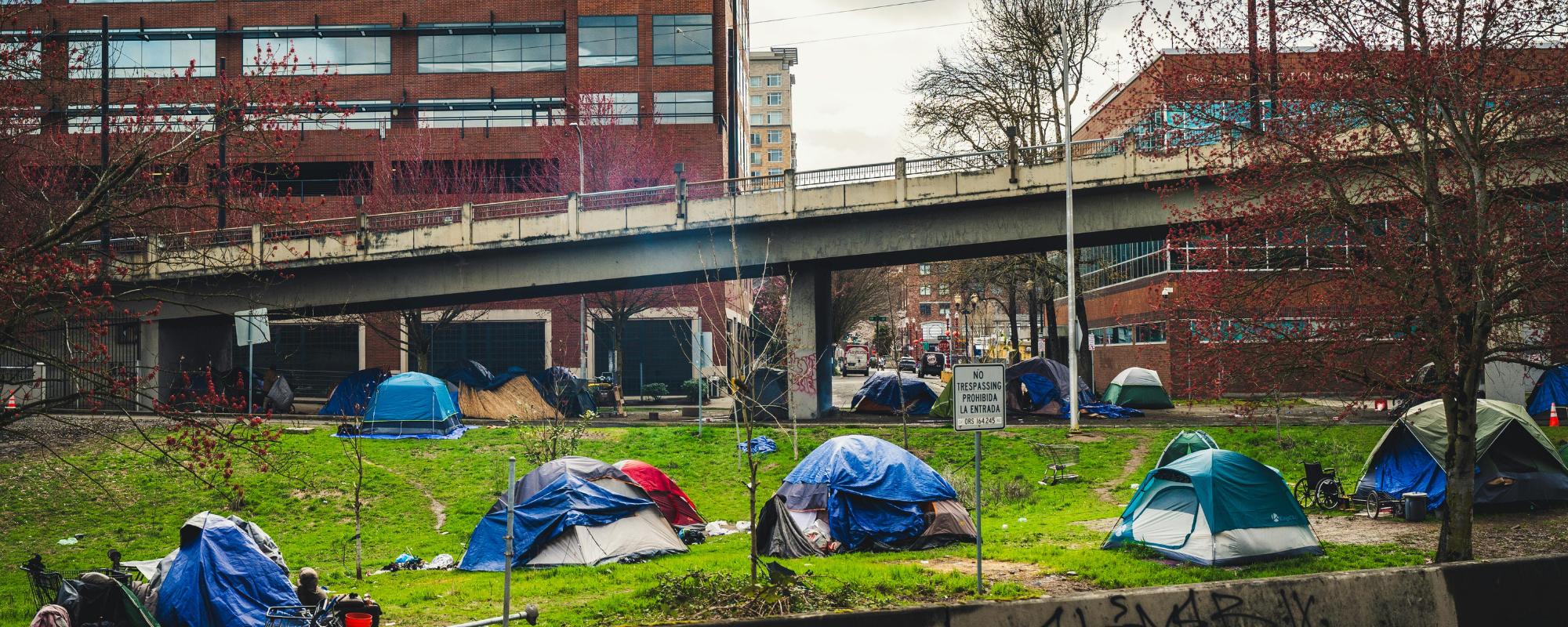
The Canadian Civil Liberties Association (CCLA) is deeply concerned by the Nova Scotia government’s recent changes to social assistance regulations that exclude people living in encampments from receiving enhanced social assistance and disability supplement benefits.
Following the Nova Scotia Court of Appeal’s decision in Lowe Estate, the province rewrote its regulations to deliberately exclude people living in tents from being eligible for the Enhanced Standard Household Rate of income assistance, despite the Court of Appeal’s decision concerning the interpretation and application of the province’s social assistance framework.
The province then made further changes to the regulations, excluding people living in tents from eligibility from the Disability Supplement, which provides additional financial support to people with disabilities receiving income assistance.
“People living in encampments are among the most vulnerable members of our society and are precisely the people that social safety nets are intended to protect,” said Howard Sapers, Executive Director of the Canadian Civil Liberties Association. “There is no principled basis for denying people with disabilities this additional support simply because they are living in a tent.”
The CCLA is particularly concerned that the province’s decision to make eligibility for the Disability Supplement dependent on housing status creates a discriminatory distinction between people with disabilities based on their housing status.
“People do not become less deserving of disability support because they are living in a tent,” said Harini Sivalingam, Director of Equality at the Canadian Civil Liberties Association. “Rather than ensuring that people with disabilities can access the supports they need, the province is creating an additional barrier for people who are already among the most marginalized in our society.”
The CCLA urges the Nova Scotia government to reverse its decision to exclude people living in encampments from eligibility for these critical social assistance and disability supports and to ensure that its social assistance policies and regulations respect equality, dignity and human rights.