
The CCLA appeared at the Ontario Court of Appeal in support of its intervention in R v Kawall, COA-23-CR-0779, an appeal that poses key questions regarding whether the constitutional and regulatory framework for protection of anonymity will be able to keep pace in the face of emerging surveillance technologies.
Particularly at issue is the complex interaction between Ontario’s regulatory framework for carding—adopted to address arbitrary and often discriminatory police records compiled on individuals in a community who are not suspected of any crime—and facial recognition technologies.
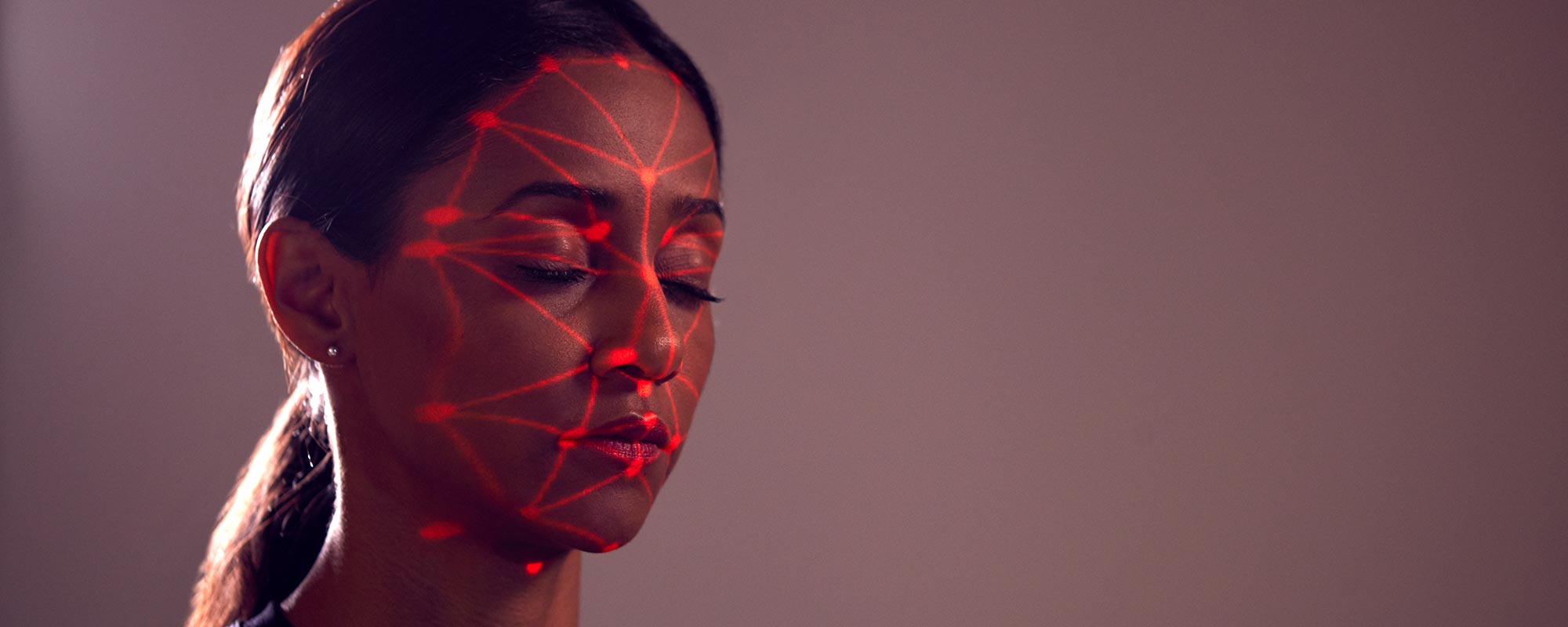
In general, facial recognition technologies have far-reaching implications for policing. Their unchecked adoption would mean an end to anonymity in public places, while their persistent tendency towards bias (and often discriminatory bias) threatens to have wide-ranging societal costs.
The Kawall appeal will not address all challenges posed by this technology, it will provide some important guidance regarding the role (and limitations) that the Charter and regulatory instruments can play in providing the important checks and balances that emerging technologies require.
In Kawall, police took a photograph of an individual in a parking lot without any basis, for the sole purpose of compiling identifying information on the person.
About three weeks later, an offence was captured on a low-quality video with two suspects, one of which was unidentified as Mr. Siddiqui. Police eventually associated the initial photograph with the unidentified suspect on the basis that the suspect had “the same height and same hair” and was seen interacting with Mr. Siddiqui. Police then used facial recognition technology to put a name to the photo, and Mr. Kawall became the second suspect.
This scenario raises a number of key questions.
The Court will need to decide whether a specific regulation brough in to reduce racial profiling prohibits police from photographing people in the way Mr. Kawall was photographed.
In the wake of public concern over the insidious and disproportionate impact that the practice of carding has on Indigenous, Black and other racialized people, Ontario adopted a regulation prohibiting police from collecting identifying information from people in the absence of verifiable grounds to suspect they are engaged in criminal activity (the Carding Regulation).
Does photographing someone in a face-to-face encounter mean that the person is providing information for the purpose of identifying the individual, as prohibited by the Carding Regulation? In its intervention, CCLA argued that it should, particularly in light of police access to facial recognition technologies.
It has been recommended that Carding Regulation should be amended to exclude “general video surveillance or the incidental photographing or recording of an individual” from its general restrictions on asking people for identifying information.
But in this instance, the photograph was far from incidental or of a general nature. Police photographed Mr. Kawall in the context of a direct “face to face” interaction with the explicit intention of compiling a dossier on him without any reasonable basis to suspect Mr. Kawall was involved in an offence. Police did so knowing that they now have the ability to put a name to the photo at any time in the future using their facial recognition capabilities. People being photographed in the street are also increasingly aware that police have facial recognition technology at their disposal.
In CCLA’s view, this clearly amounts to technological carding. Police did not ask Mr. Kawall for his name or ID because they didn’t have to—a photo is enough in the age of facial recognition technologies. And the impact on Mr. Kawall is just as insidious as if police demanded his name rather than snapping a photograph of him, raising all the concerns and societal costs that the Ontario regulation sought to address.
More generally, the Kawall appeal is focused on the taking of a photograph of a person in public, against the backdrop of Ontario police’s current facial recognition capabilities.
Use of facial recognition technology by police in general raises significant questions regarding people’s ability to move in public anonymously, a right that we have historically taken for granted. Police forces in Ontario are already using this highly intrusive technology—albeit in a more limited manner that does not currently allow for identification of any person in Canada.
In CCLA’s view, facial recognition technology cannot be ignored when assessing the scope of constitutional privacy protection that people can expect in public spaces.
CCLA is extremely grateful to Travis Walker, Imran Ahmad and Humna Shaikh of Norton Rose Fullbrith for their excellent pro bono representation in this matter.







 English (Canada)
  Français du Canada