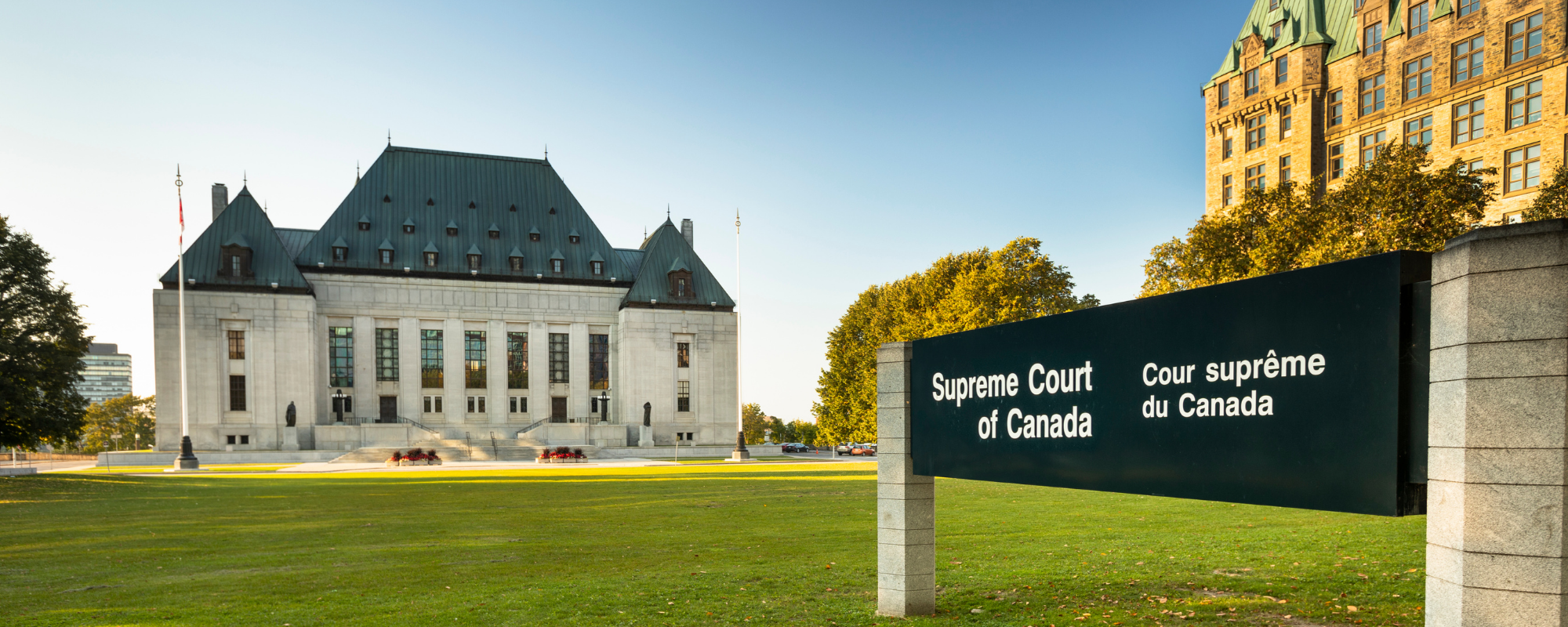
OTTAWA – The Canadian Civil Liberties Association (CCLA) is deeply disappointed by today’s Supreme Court of Canada (SCC) decision rejecting the constitutional challenge to Quebec’s Act respecting the laicity of the State (Bill 21). While the Court has left open the possibility of declaratory relief recognizing the serious constitutional harms caused by a legislation invoking the notwithstanding clause, this decision remains a very disappointing result. Bill 21 remains in force, continuing to prevent people from pursuing certain public-sector professions because of their religious beliefs.
The decision is a significant setback for equality and religious freedom in Canada. Even though some Justices declared that Bill 21 violates section 2, 15 and 28 of the Charter, such recognition will not, on its own, restore the opportunities and professional aspirations denied to those targeted by the law.
“This is a deeply disappointing outcome,” said Howard Sapers, Executive Director of the Canadian Civil Liberties Association. “Since 2019, we have witnessed how Bill 21 has treated religious minorities, particularly Muslim women, as second-class citizens. This judgment does not restore the rights, opportunities and careers that have been taken away.”
The implications of this decision extend far beyond Bill 21. Since its adoption, the Quebec government has introduced Bill 94 and Bill 9, continuing its efforts to expand restrictions on religious expression in public and other institutions. The government’s recent statements about prohibiting elementary school students from wearing religious symbols are particularly concerning.
These measures reflect an increasingly distorted understanding of secularism that risks excluding religious minorities from public life. They also raise serious concerns about the growing use of the notwithstanding clause to shield legislation from meaningful constitutional scrutiny.
“Bill 21 has already denied a generation of Quebecers the opportunity to pursue their chosen professions in public service,” said Harini Sivalingam, Director of the Equality Program at the Canadian Civil Liberties Association. “Allowing this discriminatory law to remain in force, despite the profound harms it has caused, risks emboldening Quebec and other governments to use the notwithstanding clause to sidestep constitutional accountability and enact laws that disproportionately target minority communities.”
CCLA calls on elected representatives, civil society and members of the public to continue speaking out against legislation that deprives people of their rights or discriminates against minorities. Governments must be held politically accountable when they use the notwithstanding clause to override fundamental rights and freedoms of its population.
The fight for equality and freedom does not end with today’s decision. CCLA remains committed to challenging discrimination and advocating for a democracy in which everyone can participate fully in public life, without being forced to choose between their faith and their future.
We are grateful for the excellent pro bono representation of David Grossman, Olga Redko, and Marie-Hélène Lyonnais from IMK in this case.