
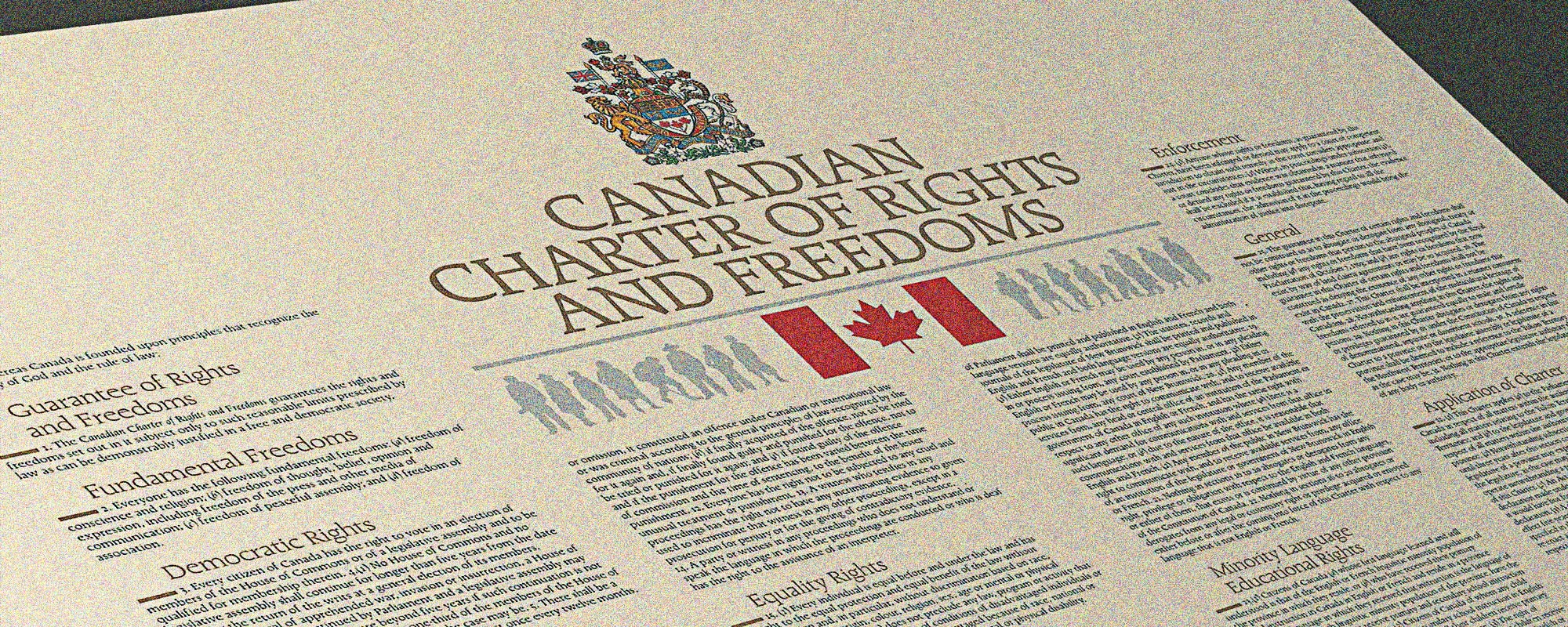
The Canadian Civil Liberties Association (CCLA) has filed its intervention factum in Saskatchewan v. UR Pride Centre for Sexuality and Gender Diversity – the first Supreme Court of Canada case to directly address anti-trans legislation in Canada’s history.
In 2023, the Saskatchewan government introduced a policy requiring trans and gender-diverse students to obtain parental consent before using their chosen name or pronouns at school. UR Pride challenged the policy and obtained an injunction on the basis that this law would cause irreparable harm to vulnerable students. Saskatchewan responded by using the notwithstanding clause (section 33 of the chartes) to pass the legislation to try to shield the law from judicial review of its harmful and discriminatory impact on the rights of trans and gender-diverse youth.
The Supreme Court is now set to hear argument on whether courts can continue to evaluate the constitutionality of legislation despite the fact that section 33 has been used to override fundamental rights and freedoms.
CCLA’s intervention focuses on the important role of courts in a democracy. We argue that s. 33 cannot be read to strip courts of their ability to interpret the chartes and issue declaratory relief. Nothing in the notwithstanding clause limits the ability of courts to say what the law does and whether rights have been infringed, even where remedies are limited. The public has a right to know whether their government is overriding their constitutional rights, and the court’s play an important role in that dialogue between the law makers and the electorate. This is especially important when rights of vulnerable and marginalized minority communities are at stake. An interpretation of s. 33 that silences the judiciary entirely doesn’t just affect trans youth, it affects anyone whose rights might one day be overridden by a government willing to invoke the clause.
The CCLA’s mandate is the protection of civil liberties for everyone in Canada, and especially for those with the least power to protect themselves. This case sits squarely at the intersection of two of our deepest commitments: protecting and advancing the rights of marginalized communities, and the preservation of Canada’s constitutional principles.






 Français du Canada
  English (Canada)