
Freedom of Religion

Freedom of religion is part of the Fundamental Freedoms program. You can find more information about it on its main program page.

CCLA to Intervene in Case on Religious Freedom in Schools

By on May 10, 2011
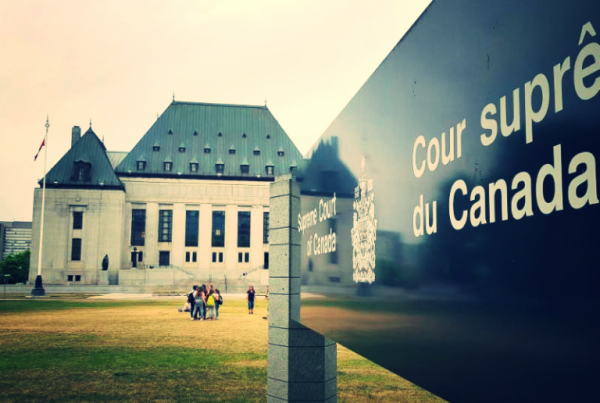
On May 18, 2011 the Supreme Court of Canada will hear arguments in S.L., et al. v. Commission scolaire des Chenes, et al. This case will consider whether a school board’s refusal to exempt students from a portion of the curriculum violates freedom of religion under the Canadian and Quebec Charters. The controversy arises out of Quebec’s Ethics and Religious Culture curriculum which is mandatory for students in Quebec at most grade levels.  Some parents have objected to their children being exposed to the course, arguing that it is not neutral with respect to religion and that requiring their children to participate in the curriculum is a violation of their religious freedom, which includes the right to raise their children according to their faith.  The parents have been denied the exemption at each stage, and have appealed to the Supreme Court of Canada.

The CCLA is intervening in the case to stand up for the religious freedom of individuals and, in particular, to affirm that the test to be considered by the Court when a freedom of religion claim is raised is the “sincerely held belief” test.  Although the court below looked to religious doctrine and testimony from religious experts, the CCLA argues that using this evidence to decide whether a breach of freedom of religion has been established is fundamentally flawed.  Freedom of religion is intimately linked to personal liberty and autonomy, and therefore must include the right to deviate from some of the practices and beliefs which may be considered mandatory by religious officials or leaders.  The CCLA acknowledges that not all exemptions sought by parents will be feasiable or reasonable, but argues that school boards must consider opportunities for reasonable accommodation when religious freedom has been breached.  In this case, that may include considering alternative curriculum options that would fulfill the curriculum’s goals and considering the best interests of the student where their views may come into conflict with their parents.

A Victory for Equality Rights in the Saskatchewan Court of Appeal

By on January 10, 2011

The Saskatchewan Court of Appeal has handed a victory to advocates of equality in rendering its decision in a reference on proposed amendements to Saskatchewan’s Marriage Act. The proposed amendments would have allowed provincially appointed marriage commissioners to refuse to perform civil marriages where to do so would conflict with their religious beliefs.  The amendments were proposed in large part because of objections by some commissioners to same-sex marriage, which became legal in Canada in 2004.  The proposed amendments are also broad enough to allow commissioners to refuse to perform marriages on other grounds, including objections to inter-faith and inter-racial unions.  A unanimous five-judge panel of the Court of Appeal concluded that the proposed amendments were unconstitutional as they violated the right to equality in a way that could not be justified.

The CCLA, represented by special counsel Merrilee Rasmussen, intervened in this case to argue that the proposed amendments were unconstitutional as they violated the Charter’s fundamental right to equality. The CCLA argued that the amendments would risk creating a system of unequal access to basic government services.  While the CCLA has always been, and remains, a staunch advocate of freedom of religion, the core function of marriage commissioners is to preside over civil marriages and, in Saskatchewan, marriages are performed either by religious officials or civil commissioners.  The CCLA has advocated for the right of religious officials to refuse to perform ceremonies that are contrary to the tenets of their faith, but believes that as marriage commissioners are hired to perform a secular government service, they must serve the public equally.

Read the CCLA’s factum here.

Read the Saskatchewan Court of Appeal’s decision here.

Re Marriage Commissioners appointed under The Marriage Act, 1995, S.S. 1995, c. M-4.1 (Saskatchewan Court of Appeal)

By on January 10, 2011

A reference on proposed amendments to Saskatchewan’s Marriage Act which would have allowed provincially appointed marriage commissioners to refuse to perform civil marriages where to do so would conflict with their religious beliefs. CCLA intervened to argue that the amendments would unjustly violate the right to equality of same-sex couples and thereby risk creating a system of unequal access to basic government services.

Freedom of Religion in the Schools: Distributing the Gideon Bible

By on December 15, 2010

CCLA is deeply concerned about a resolution passed by the Waterloo Region District School Board (WRDSB) allowing Gideons International to distribute the Gideon Bible to grade 5 students.  Schools will be sending home consent forms to all students in the fifth grade and providing the Gideon Bible to those students whose parents consent.  CCLA expressed concerns about this practice in 2009 and has written to the school board on two occasions again this year to articulate the particular problems raised by the policy and its implementation.  CCLA has also been contacted by a number of members of the Waterloo community who have expressed their concerns as well.  The matter has been widely covered in the media and a petition has been started by local community members urging the Board to reconsider its decision.

Read CCLA’s letters to the WRDSB here and here.

Read more…

Debating Freedom of Religion: Bibles In The Classroom

By on December 2, 2010

Cara Zwibel, director of the fundamental freedoms program at CCLA, debates whether distributing Gideon bibles in the classroom is an infringement of civil liberties, and particularly freedom of religion. Zwibel notes that while there is no official Church and state separation in Canada, court decisions have “talked about the need to ensure that the state doesn’t impose religious views on individuals or does not engage in coercion. This school board is either over the line or close to it.”

Listen to the radio debates:

AM 570 – Jeff Allan Show – December 1, 2010

Audio clip: Adobe Flash Player (version 9 or above) is required to play this audio clip. Download the latest version here. You also need to have JavaScript enabled in your browser.

AM 640 John Oakley Show – “Bibles in the Classroom?” Dr. Scott Masson & Cara Zwibel

Audio clip: Adobe Flash Player (version 9 or above) is required to play this audio clip. Download the latest version here. You also need to have JavaScript enabled in your browser.

Ontario Court of Appeal Rules on Issue of Niqab in the Courtroom

By on October 13, 2010

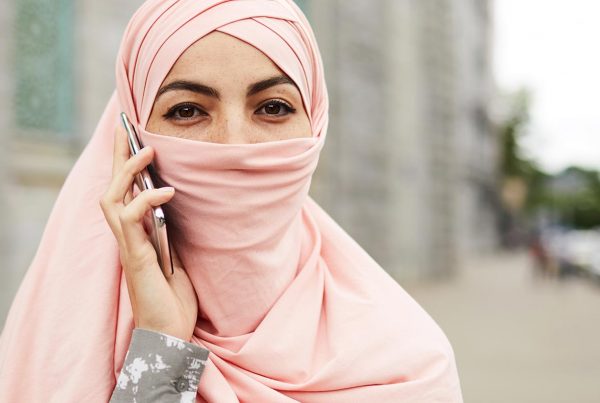
The Ontario Court of Appeal released its decision today in R. v. N.S., a case that considered whether a sexual assault complainant may testify at a preliminary inquiry while wearing a hijab and niqab which cover her face and body, except for her eyes.  The Court of Appeal quashed a decision by a preliminary inquiry judge that required the complainant, N.S., to remove her niqab, finding that the judge had not conducted a full inquiry into N.S.’s religious freedom claim.  The Court also states that, at a preliminary inquiry, where the only objection to wearing the niqab is based on the importance of facial demeanour to credibility assessments, a witness will generally be permitted to testify wearing her niqab. The Court notes that, in each case, an assessment will have to be done that considers the context and competing interests at stake.  Overall, however, the Court’s decision respects religious freedoms and suggests that it will be rare for a court to require a woman to remove her niqab to testify.  Moreover, an accused person requesting such an order will have a heavy onus in demonstrating why it is necessary.  Simple claims that it is important to see a witness’ face will not suffice.  Read more…

Women’s right to give evidence in a niqab defended by CCLA

By on June 8, 2010

The Canadian Civil Liberties Association will present arguments before the Ontario Court of Appeal regarding whether a Muslim woman, who is a complainant in a sexual assault case, must remove her niqab in order to testify.  A niqab is a garment, often worn for religious reasons, that covers the facial features below the eyes.  Although the right to a fair trial is a fundamental right which the CCLA supports vigorously, it does not usually encompass permitting a defendant to prescribe how a witness may be dressed, seated or made comfortable in the context of trial proceedings.  Scientific evidence indicates that facial cues are unreliable predictors of credibility – particularly in the context of cultural differences.  CCLA will argue that, absent objective threats to fair trial rights, individuals should not be required to choose between following their religious beliefs, and accessing justice.

Read more…

CCLA submits brief opposing ‘niqab ban bill’

By on May 14, 2010

CCLA has submitted a brief to the Quebec Legislative Assembly expressing serious concerns about the constitutionality of Bill 94, proposed legislation that would require all those requesting a wide range of public services in Quebec to show their faces.  As outlined in previous CCLA statements, the organization believes that the Bill is unnecessary, dangerously ambiguous, and would unjustifiably violate freedom of expression, freedom of religion, and the right to equality.  CCLA’s brief expands on these points, and also outlines the dangerous precedent set by the bill, which is based on the assumption that the State may attach conditions to its duty to serve citizens, and establishes the principle that  citizens have a duty to identify themselves to obtain the services of the State. Typically, it is the totalitarian state that randomly requires citizens to identify themselves, demands justification for their every-day activities, and places unnecessary, discriminatory conditions on the receipt of government services.  Democratic countries, including Canada, should reject such measures.

CCLA to advocate for equal access to civil marriage before Court of Appeal

By on May 12, 2010

Since the legalization of same-sex marriage in 2004, there has been an ongoing controversy in Saskatchewan regarding whether civil marriage commissioners should be required to solemnize same sex marriages. The government of Saskatchewan has asked the Court of Appeal to examine the constitutionality of two proposed bills that would permit civil marriage commissioners to refuse to perform civil marriages which run contrary to their personal religious beliefs.  Although the bills make no reference to same-sex marriage, it is clear that the proposed changes arose from ongoing controversy surrounding civil marriage commissioners being asked to perform same-sex marriages. Read more…

CCLA opposes National Assembly Bill 94 (The Niqab Bill)

By on March 31, 2010

Bill 94, tabled last week in Québec City, is entitled An Act to establish guidelines governing accommodation requests within the Administration and certain institutions.  Its central provision, section 6, reads as follows:

The practice whereby a personnel member of the Administration or an institution and a person to whom services are being provided by the Administration or the institution show their face during the delivery of services is a general practice.

If an accommodation involves an adaptation of that practice and reasons of security, communication or identification warrant it, the accommodation must be denied.

The Bill is applicable to all government sectors and to many public institutions, among them, daycare centres, public school boards and health facilities.

In essence, the government is presuming that interacting with a woman wearing the niqab who works for the government or is seeking a governmental service is an undue burden.

In our view, this general prohibition is vague, will lead to abuse and further marginalization, constitutes a denial of freedom of expression and religion, and is unnecessary. Read more…