| Freedom of religion is part of the Fundamental Freedoms program. You can find more information about it on its main program page. |
Freedom of Religion
By Cara Zwibel on February 27, 2013
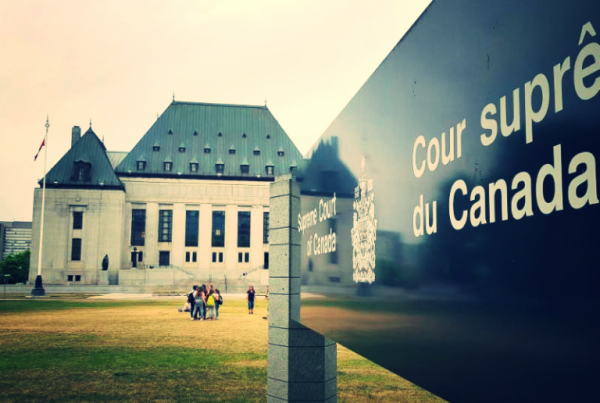
The Supreme Court of Canada has rendered its long-awaited decision in Saskatchewan Human Rights Commission v. William Whatcott, et al. and upheld the constitutionality of hate speech provisions in the Saskatchewan Human Rights Code. The CCLA had intervened in the case to argue that the section – s. 14(1)(b) – is unconstitutional under section 2(b) of the Canadian Charter of Rights and Freedoms, as it acts as an overbroad and unjustifiable limit on freedom of expression. The Supreme Court did not accept this argument and said that while hate speech provisions do limit freedom of expression, the limit is justified in light of the goals of promoting the inherent dignity and equal rights of all and discouraging discrimination. The Court attempted to clarify and slightly modify the definition of “hatred” to provide tribunals and courts with more guidance when applying hate speech provisions. It held that hate speech provisions should be applied objectively, requiring tribunals to determine “whether a reasonable person, aware of the context and circumstances surrounding the expression, would view it as exposing the protected group to hatred.” The Court also held that hatred is to be interpreted as only extreme emotions of “detestation” and “vilification”. Finally, the focus should be on the effects of the expression. The question of the speaker’s intent and/or the sincerity of their belief is not relevant. The appeal arises from the distribution of three flyers by William Whatcott in 2001 and 2002 that contained statements about homosexuality and the morality of certain types of sexual behaviour in often crude, confrontational, and polemical terms. While CCLA denounces and condemns the content of Mr. Whatcott’s flyers, we argued that the hate speech provisions are both vague and overly broad, that they chill freedom of expression and that the experience with these provisions over the years has shown them to be unworkable. The CCLA continues to believe that a mature democracy requires the least restriction on the expressive rights of its citizens and advocates a position in favour of the vigilant and principled protection of freedom of expression, including offensive statements of opinion. Indeed, the right to express an unpopular or non-mainstream opinion remains an important tool in the arsenal of equality-seeking groups. CCLA will continue to promote and protect freedom of expression for all. Read CCLA’s factum in the Whatcott case here.
By Cara Zwibel on February 5, 2013
The CCLA is intervening in R.C. v. District School Board of Niagara, a case proceeding before the Ontario Human Rights Tribunal in St. Catharines on February 5 and 6, 2013. A parent of a child in the Niagara School Board, R.C., complained to the Human Rights Tribunal about the School Board’s policy of allowing the distribution of Gideon Bibles to students in Grade 5, with parental consent. CCLA has been involved in this issue in a number of school boards arguing that the practice of allowing a religious organization to proselytize to students through the school is inconsistent with freedom of religion and the right to equality under the Canadian Charter of Rights and Freedoms. Even where policies allow for the distribution of materials by various religious groups (as does the amended policy in Niagara), this presents problems as it involves the school board in determinations about what constitutes a religion and which texts can be distributed. Moreover, very few religious organizations have the resources to offer free texts to all students at a particular grade level. CCLA believes that schools can and should teach about religious beliefs and practices, but no school should impose beliefs on students or suggest a preference for one religious group over another. The policy of allowing Bible distribution in schools with parental consent requires that parents or students make a statement of faith to a public school board, and this is inappropriate. CCLA has intervened in the R.C. case to put forward arguments to ensure that provisions of the Ontario Human Rights Code are interpreted in a way that respects the values enshrined in the Canadian Charter.
By Cara Zwibel on December 20, 2012
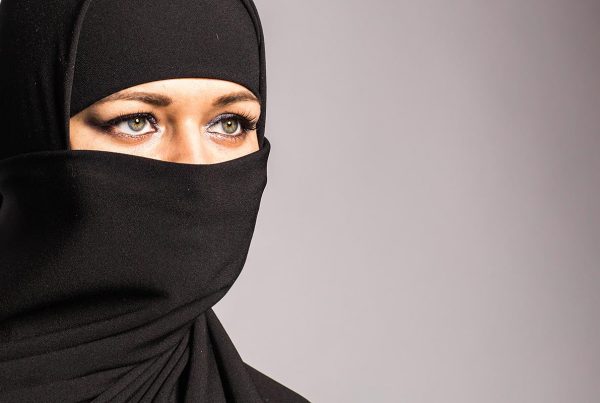
The Supreme Court has rendered its decision in the case of R. v. N.S., which considered whether a sexual assault complainant could testify in Court while wearing a niqab for religious reasons. One of the accused in the case argued that the niqab could not be worn as this would affect the ability of his lawyer to effectively cross-examine the complainant and impair the ability of the judge (and/or jury) to assess her credibility by observing her demeanour. The CCLA intervened in the case to argue that freedom of religion must be respected and that, where there is a conflict between this freedom and an accused’s right to a fair trial, these rights must be reconciled. However, CCLA’s submissions noted our ongoing concerns about the use and value of demeanour as an indicator of credibility and stated that allowing a witness to testify in accordance with her religious convictions promotes trial fairness. A majority of the Supreme Court has agreed that the religious rights of the complainant must be reconciled with the accused’s right to a fair trial. The decision provides a number of considerations that will be relevant to determining how this reconciliation can be achieved on a case-by-case basis, including the nature of the evidence the witness is expected to give and how crucial it is to the case. While we are pleased that the majority of the Court recognized the importance of reconciling rights, it remains to be seen how the decision will be applied in practice. It is likely that there will be very few cases where this issue will arise, but we are concerned that, when it does, individuals may be forced to choose between accessing the justice system and staying true to their religious convictions. The dissenting reasons of Justice Abella provide greater protection for freedom of religion, recognizing that while it is easier to assess demeanour if a witness’ face is not covered, there are many other indicators of demeanour that are not affected by the niqab. Absent a case where a witness’ face is at issue in the case (for example, when there is a question of identity), Justice Abella would not require a witness to remove her niqab in order to testify.
By Noa Mendelsohn Aviv on May 23, 2012
CCLA presented oral and written submissions to the legislative committee looking into Ontario’s Bill 13, an Act to Amend the Education Act with respect to bullying and other matters. CCLA’s submissions emphasized the fundamental rights and freedoms of all people in Canada, including young people in schools (subject to reasonable limits). These rights include freedom of expression, freedom of association, the right to equality, and the right to life and security of the person. In light of these protections, CCLA’s submissions included the following:
For CCLA’s full written submissions and recommendations, click here.
By Cara Zwibel on February 17, 2012
The Supreme Court of Canada has rendered its decision in the case of S.L. v. Commission scolaire des Chenes, a case in which parents sought an exemption for their children from Quebec’s mandatory Ethics and Religious Culture (ERC) course. The Supreme Court found that the refusal to grant an exemption did not violate the parents’ freedom of religion in this case. While the Court accepted that the parents had a sincere belief in the need to pass on the precepts of their religion to their children, the Court found that the ERC course did not interfere with this obligation in an objective way and therefore freedom of religion was not infringed. CCLA intervened in this case to ensure that ‘sincerity of belief’ remains the approach to assessing freedom of religion claims. While the Court did affirm this test and rejected relying on religious experts or leaders, the Court’s statement that there is a need to show an infringement on an objective basis is somewhat concerning as it has the potential to dilute the protection of freedom of religion under the Charter. It remains to be seen what impact this decision will have on the protection of freedom of religion generally and ongoing issues around religion in the schools. Read a copy of the CCLA’s factum in the case here (in French).
By Cara Zwibel on January 17, 2012
The issue of public school boards distributing Gideon Bibles is once again before some Ontario school boards. CCLA has previously expressed concerns about this practice and wrote about the issue to the Waterloo Region District School Board (WRDSB) on a number of occasions. The WRDSB subsequently rescinded their policy on the distribution of non-instructional religious materials and ceased the practice of allowing the Gideons to distribute Bibles to students. You can read more about the CCLA’s previous work on this issue here. CCLA has recently learned that the Bluewater District School Board is currently considering policy options around their ongoing practice of allowing Bible distribution. In addition, it appears that the practice may also be occurring in schools in the Grand Erie District School Board. CCLA has written to both of these boards raising concerns about this practice and policies that may allow for the proselytization of religion to public school students. Read CCLA’s letter to the Bluewater District School Board here. Read CCLA’s letter to the Grand Erie District School Board here.
By Cara Zwibel on December 8, 2011
The Supreme Court of Canada will consider an appeal which looks at the issue of whether a sexual assault complainant may testify in Court while wearing a niqab for religious reasons. The case, on appeal from the Ontario Court of Appeal, arose when one of the defendants in a sexual assault case claimed that his right to full answer and defence was infringed by the complainant, N.S., testifying while wearing her niqab (at the preliminary hearing). He argued that in order to effectively cross-examine the complainant, it is essential to be able to observe her demeanour. CCLA intervened in the Court of Appeal and was also granted leave to make written submissions at the Supreme Court of Canada. CCLA has argued that religious freedoms must be respected and that allowing a woman to testify while wearing her niqab promotes trial fairness. CCLA has also pointed out ongoing concerns about the use and value of demeanour as an indicator of credibility. The Supreme Court will hear arguments in the case on December 8, 2011. Read a copy of the CCLA’s Supreme Court of Canada factum here.
By Noa Mendelsohn Aviv on September 22, 2011
The CCLA has written to the Minister of Northern Development, Mines and Forestry (MNDMF) regarding a potential threat to traditional aboriginal burial sites and sacred lands that has resulted from a proposed mining and development project. In its letter, CCLA reminded the Minister of certain implications of Canada’s constitutional protection for freedom of religion, including the right to define the scope and manner of expression of spirituality, subject to reasonable limits. CCLA’s letter also sets out certain rights protected at international law, including the right of Indigenous peoples to maintain and protect manifestations of their cultures, including historical sites; and the right to access in privacy religious and cultural sites. To read a copy of CCLA’s letter, click here. Update (March 8, 2012): Click here to read a letter from the Primate of the Anglican Church of Canada to Premier Dalton McGuinty supporting KI’s concerns.
By Cara Zwibel on July 26, 2011
The CCLA is deeply concerned about the situation in Alberta, where a community has been repeatedly denied a public secular school option for their children. The Greater St. Albert Catholic Regional Division (“GSACRD”) is the public school board in the Greater St. Albert region. This school division offers an education where “Catholic theology, philosophy, practices and beliefs, the principles of the Gospel and teachings of the Catholic Church, are made accessible to students, including in the curriculum of every subject taught, both in and outside of formal religion classes, celebrations and exercises”. Although a Protestant separate school board also operates in some parts of Greater St. Albert and is largely secular, no such schools exist in the towns of Morinville or Legal. Thus, for parents in these two communities, there is simply no secular public option. CCLA believes that the failure to provide parents with a secular public school option is in violation of constitutional guarantees. The CCLA has also sought clarification from the GSACRD about the legal basis on which it, as a public school, can provide an education that is fully permeated with religion. Alberta law explicitly provides that students are to be permitted to leave the classroom when religious instruction or exercises take place, but a school where religion permeates all activities renders these laws ineffective. The constitutional framework that is relevant in Alberta also appears to preclude an education of this kind. Most recently, parents in the town of Morinville were told that a secular school option would be made available within their town, by a neighbouring school division. This compromise does not solve the problem, however, since parents who send their children to this school cannot participate in the governance of the school board or even vote for trustees, since they don’t live in the district. In any event, it has recently been suggested that this plan cannot be put in place because it is financially too costly. Parents in this community are once again unsure of whether or how they can secure a public secular education for their children. The CCLA finds this unacceptable and urges the school board to act promptly to ensure that the constitutional rights of parents and students in thier community are respected and a public secular school option is provided.
By Communications on July 11, 2011
The debate over whether religion belongs in public schools has picked up again, with regards to whether – and to what extent – should a school accomodate students’ religion. The current debate focuses on a public school in Toronto that makes its cafeteria available to its (majority) Muslim students for Friday prayer Here are some links and resources: >> National Post – HolyPost – Q&A: Canadian Civil Liberties Association’s Cara Zwibel on religion in schools – July 6, 2011 >> Globe & Mail – Editorial – Public schools cannot be places of prayer – July 8, 2011 >> National Post – Chris Selley’s Full Pundit: A public school is not a mosque – July 11, 2011 >> Toronto Star – Heather Mallick: Time for someone to speak up for shy young girls – July 10, 2011 >> Cara Zwibel on the Jeff Allan Show (570 News) – July 11, 2011 Audio clip: Adobe Flash Player (version 9 or above) is required to play this audio clip. Download the latest version here. You also need to have JavaScript enabled in your browser. >> More on CCLA’s work on freedom of religion |
||
|
Copyright © 2013 Canadian Civil Liberties Association - All Rights Reserved |
||